Closeness Despite Digitalization: What Truly Builds Client Trust
Why Good Client Relationships Cannot Be Automated


Empathy, Clarity, and a Digital Future
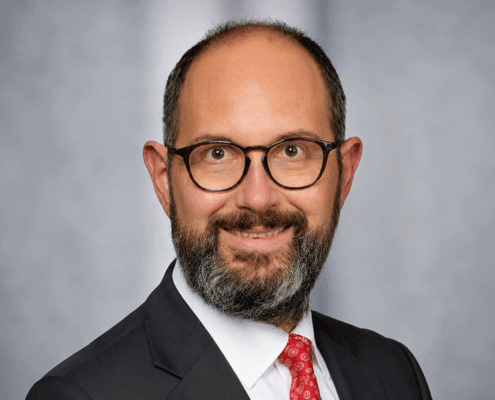
Interview with Monika Friedli · Partner, Kaufmann & Friedli Law Firm, Bern · Law Firm Blog
Monika Friedli is a partner at the Kaufmann & Friedli law firm in Bern. Her focus areas include liability law, medical liability law, social and private insurance law, and victim assistance law. These legal fields are often emotionally charged and require particular empathy, clarity, and experience.
Monika Friedli accompanies many of her clients for years. She places great importance on quick personal contact, is easily reachable by phone, and ensures that every client has a dedicated contact person. In her emotionally sensitive legal fields, empathy plays a particularly important role.
When a new client comes to you – how do you proceed to build trust?
In our legal fields, we exclusively represent affected individuals, never insurance companies. This means our clientele is inherently vulnerable. For me, it is therefore important to establish initial contact as quickly as possible – preferably by phone, to provide reassurance promptly. Afterwards, I invite them for a personal meeting, provided the affected person is mobile. If necessary, I also visit clients in the hospital or a care facility, depending on the situation and health status.
Many of our clients are dealing with legal representation or insurance for the first time. They need orientation: Where do I stand? What can I expect? I want to give them this security – through quick contact and a personal initial consultation.
How do you conduct the initial consultation?
First, I clarify whether the case actually falls within our legal area – for example, whether it concerns liability, social insurance, or medical liability law. Only then can I ensure that I can provide the necessary expertise. For most clients, it is particularly important in the initial consultation to get a general orientation: What happens next? What does a letter from the insurance company mean? Many come with specific questions or documents, and I then explain what they mean.
A central issue is also the question of costs. Private individuals, in particular, often hesitate to mandate legal representation because it could be expensive. Therefore, I transparently discuss what costs they might incur – and thereby give them a sense of security.
How do you deal with unrealistic expectations?
Often, clients come through legal protection insurance, in which case the cost question is usually simple – the clients know that their legal protection insurance covers the lawyer’s fees. In clear liability cases, such as when a pedestrian is hit by a car through no fault of their own, it is also clear that the opposing liability insurance must bear the costs.
If these conditions are not met, I discuss individually with the clients how we will proceed – also regarding financing. Precisely because proceedings can sometimes drag on for years, it is important to create clarity early on.
How do you maintain contact with your clients over the years?
I maintain close contact – especially in long proceedings, to alleviate clients’ worries that ‘nothing is happening.’ As soon as I receive news from the opposing side, I actively inform them. If there is no feedback for a longer period, I proactively reach out – asking how they are doing and providing a timeframe for when we can expect news. This gives clients orientation and prevents them from feeling ‘left alone.’
There is no fixed rule for how often I am in contact with clients. I keep the cases well in mind, know when I expect a response, and then actively follow up if it doesn’t come. Some clients want close support, others prefer to be contacted less frequently – it’s very individual.
How do you prefer to communicate with clients?
I prefer to talk on the phone. Many of my clients are not familiar with legal language, and often German is not their native language. Written communication – whether by post or email – carries the risk of misunderstandings. Of course, I also use electronic channels today. But on the phone, I can explain the current situation more quickly.
Why is a dedicated contact person so important for every client?
Our work is very personal. It involves injured or deceased people and their relatives – often highly emotional cases. For clients, it’s important not to have to tell their story anew every time.
Trust is the basis of our work. I give recommendations – and these are only accepted if there is trust. A dedicated contact person creates this basis of trust.
How do you utilize your team’s expertise?
We are a small law firm, all specializing in the same legal fields and with corresponding additional qualifications. In the morning during coffee breaks or at lunchtime, we discuss cases. We live by the open-door principle: if I’m stuck on a case, I go to the next office, discuss it, and get new input. Short communication channels and a high level of professional exchange – that’s our strength.
How do you ensure that clients don’t feel ‘left alone’?
I am the central contact person. I coordinate expert opinions, communicate with all parties involved. Everything goes through me, and clients know exactly who to turn to. This reduces uncertainty and provides clarity.
Is there a case that particularly stands out in your memory?
Currently, I am assisting a family whose toddler was severely injured in a fall. It involves clarifying liability, providing support over many years – probably 15 to 20 years. How will their health develop? Is professional integration possible? What pension entitlements exist? We accompany such cases long-term.
As a mother, such a case naturally affects me emotionally – even if I work professionally, I am also human.
What distinguishes your law firm from others?
We are six people, all specialized in the same legal fields – that’s unusual. I don’t see us as competitors, but as a team with concentrated expertise. We work empathetically and close to people – our clients appreciate that.
How did you learn this empathetic communication?
Learning by doing. A certain basic disposition certainly plays a role – communication is our tool. If you want to represent people, you should be empathetic and communicative. I believe I can connect well with people, sense how I need to communicate, what language and tone I should choose – that is very individual.
What challenges do you foresee in the coming years?
Specifically two points: Firstly, the growing pressure on insurance companies to save money – the work becomes more complex, finding solutions more difficult. Secondly, digitalization. I myself am a fan of it, but many of my clients are not digitally savvy. From 2026, digital submissions will be mandatory in one canton – that’s a big challenge for everyone.
I provide as much support as possible – I invite them to come to the law firm with their files, organize documents, and help with sorting. If necessary, I encourage them to seek support from their environment. For me, this is part of Matter management.
Do you use automatic email notifications?
Only during holidays. Otherwise, I prefer to write personally, even if it’s just a short sentence like: ‘I have received your message and will get back to you soon.’ I find automated responses impersonal and unhelpful.
I want to be able to respond more promptly – this has become more challenging due to digitalization. Previously, you had days to respond; today, clients expect feedback almost immediately. I make an effort to provide feedback if I still need time to review a request – this builds trust, and clients know their concern has been received.
What is your stance on messengers like WhatsApp for client communication?
We have decided against it at this time. We do not want to create additional dynamics that lead to 24/7 availability. Furthermore, there is a risk that important information gets lost in the flood of information. For our law firm, traditional communication channels are a better fit.
What do you recommend to other law firms?
Recommendations are difficult because every law firm is different. But what I can say is: personal contact, transparency, and clarity in communication are key for me.
When former clients recommend me, that is the greatest confirmation for me – not only for the legal work but also for the human component.
For two years, she has been using timeSensor LEGAL 365 daily, combining her extensive experience with a keen eye for the people she supports. Many thanks to Monika Friedli and the entire team at Kaufmann & Friedli law firm for their openness and for the inspiring conversation.
Kaufmann & Friedli Law Firm